AcademicJune 5, 2025
Raft Consensus Algorithm in Typescript using Express.js
A TypeScript and Express implementation that demonstrates Raft elections, heartbeats, and replicated key-value commands.
- API
- Computer Science
- Distributed Systems
- Software Architecture
- Express
- TypeScript
Overview
This project is a small multi-node implementation of Raft, a consensus protocol for keeping replicated state machines in agreement. It runs each node as a TypeScript and Express service, with Docker Compose configuration for starting a cluster. The implementation follows the core Raft ideas of leader election and log replication, based on the Raft paper by Diego Ongaro and John Ousterhout.
Elections, requests, and replication
Each node begins as a follower and uses a randomized election timeout to decide when to start an election. A candidate requests votes from its configured peers, and a majority is required before the node becomes leader. The Express API exposes health and cluster status routes, client command submission, log inspection, and the Raft request-vote and append-entries RPCs.
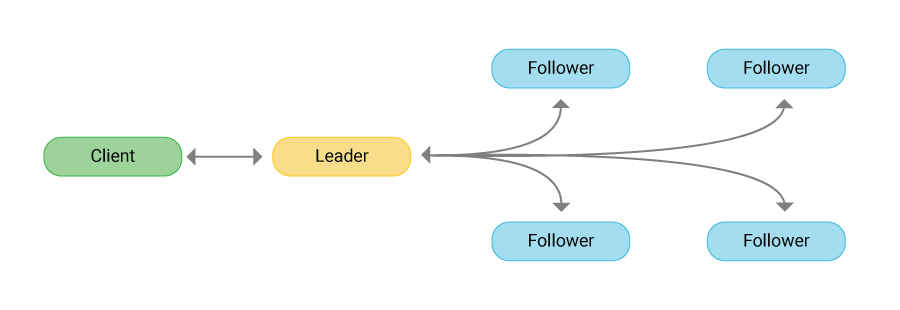
A command sent to a leader is replicated as a log entry.
The LogManager checks previous log position and term, reconciles conflicting entries, persists the log to a per-node JSON file, and applies committed entries to a key-value state machine.
Client command -> leader log -> peer replication -> commit index
                                                   |
                                                   v
                                      key-value state machine
The code also includes add and remove operations for cluster members, but broadcasting membership changes is still marked as a TODO. This is a learning implementation of protocol concepts, not a claim of production-grade consensus behavior.
What I learned
Implementing the protocol made terms, elections, majority votes, and log matching concrete parts of a service rather than only paper concepts. It also highlighted how the HTTP API, node state, persistent log, and state machine need to work together for replicated commands.